Tides, Foraging and Seals: The Secret Rhythm of the Opal Coast
On the Opal Coast, the sea dictates everything. Learn to read the tides, to forage safely and within the rules, and to spot seals: the complete guide, from hosts who live by the coefficients.
By the Blueportel team — hosts in Le Portel · Updated on · 12 min read
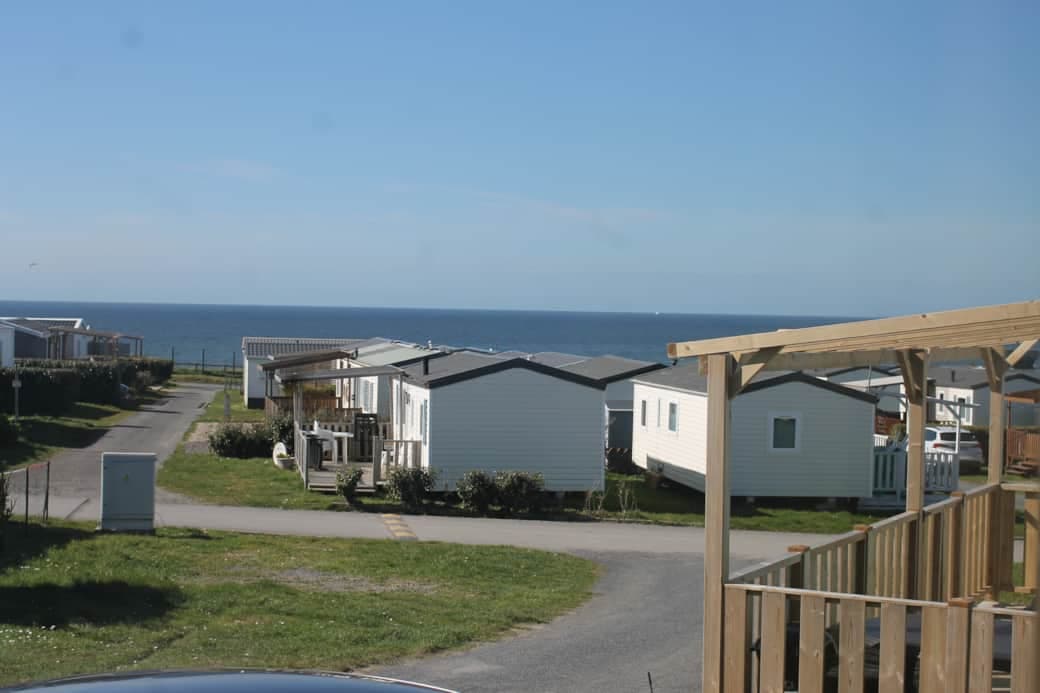
On the Opal Coast, the sea rises and falls by several metres twice a day, and that rhythm governs everything: foraging, the approach to Fort de l'Heurt, seal watching, even the timing of the best photos. Understanding the tides is what turns a tourist into someone who truly knows the coast.
We live by this rhythm from our cliff at Le Portel, where we rent our sea-view mobile homes. Every week we give our guests the tide schedule and the day's coefficient — because it's the information that makes a stay. Here's everything you need to enjoy the foreshore safely and within the rules.
Understanding tides in five minutes
A tide is the rise (the flood) and fall (the ebb) of the sea, driven by the pull of the Moon and the Sun. On the Opal Coast you get two high tides and two low tides a day, shifting about 50 minutes later each day. The range — the height difference between high and low water — is large here, among the greatest in France after the Bay of Mont-Saint-Michel.
This range is measured by the tidal coefficient, a number from 20 to 120: the higher it is, the lower the sea drops (and the higher it rises). From 100 upwards, these are spring tides — the foreshore is uncovered far out, revealing a landscape of sandbanks and rocks, a forager's paradise.
Reading a tide table (and never going without one)
A tide table gives, for each day, the time of high water (HW) and low water (LW), along with the coefficient. For foraging and foreshore walks, you plan around the low-water time: you head down to the foreshore about 2 hours before LW, and come back up well before the flood returns.
Tide tables are available at tourist offices, pharmacies, in the local press and through dedicated apps. Our hosts' rule: never go down to the foreshore without checking the day's schedule and coefficient the evening before. It's the information we hand to every guest on arrival.
Foraging: what you gather, where and how
Foraging on the foreshore is one of the great joys of the Opal Coast — open to all, free and sociable. On the uncovered foreshore, you gather according to the season and the spot:
- Cockles and razor clams, in the sand of the big beaches, spotted by their tell-tale little holes.
- Mussels, on rocks and rock armour (sea walls, the fort's bank).
- Brown shrimp, with a push-net in the pools and channels of the foreshore.
- Periwinkles and whelks, clinging to rocks and seaweed.
- Velvet and brown crabs, under stones — always put the stone back after turning it.
Regulations: forage responsibly
Recreational foraging is regulated to protect the resource. The essential rules to follow on the coast:
- Minimum sizes: each species has a size below which it must be returned to the water (cockles and mussels, for instance, have a legal minimum size). Carry a measuring gauge.
- Quotas: quantities are limited per person per day — foraging is a leisure harvest, not a commercial one.
- Permitted tools: no gear that massively turns over the foreshore. Always put back any stones you lift, beneath which a whole fauna lives.
- Sanitary zones: some areas are closed to shellfish gathering depending on water quality. Check with the tourist office or town hall before eating your catch.
- Common sense: take only what you'll eat, leave the rest for the sea and for others.
Safety: the golden rule of the foreshore
Every year, walkers and foragers are caught out by the incoming tide on this coast. The danger is real but avoidable. The flood comes back fast, sometimes faster than you can walk, and can cut off your route by going round a sandbank. A few simple principles are enough to forage with peace of mind:
Always check the schedule and come back up well before the theoretical time the flood returns. Never go so far out that you lose sight of your entry point. Beware of channels that fill first and can isolate you. And in fog — common on this coast — stay near the shore. In doubt, call 196 (sea rescue) or 112.
Where to watch seals on the Opal Coast?
The coast is home to two seal species — the harbour seal and the grey seal — visible year-round, resting on sandbanks at low tide. The best viewing sites are to the south, in the bays:
Authie Bay (towards Berck, about 45 minutes from Le Portel) and the neighbouring Bay of Somme are home to the largest colonies in northern France; you watch them from the shore, binoculars in hand, on the falling tide. To the north, the Cap Gris-Nez area also offers regular sightings. The absolute rule: watch from a distance, never approaching or scaring the animals — a disturbed seal returning to the water uses up vital energy, especially the young.
The right moment: tide and activity calendar
To plan your stay around the sea, here are the markers we give our guests:
| Activity | Ideal tide | Tip |
|---|---|---|
| Foraging | Low water, coefficient > 80 | Go down 2 h before LW |
| Approaching Fort de l'Heurt | Low water | Never on a rising tide |
| Seal watching | Falling tide | Bay sandbanks, binoculars |
| Swimming | Mid-rising tide | Warmer, deeper water |
| Photography / sunset | Any tide | Low tide for foreshore reflections |
| Sand-yachting | Low tide | Wide, firm exposed beach |
Living by the rhythm of the sea from Le Portel
The great advantage of a stay in Le Portel is being able to plan your day around the tide effortlessly. From the terrace of our sea-view mobile homes, you watch the sea rise and fall — one glance tells you whether it's time to head down to the foreshore or stay warm. The beach is a few hundred metres away, which changes everything when the low-water window is short.
To prepare your visit, check the live availability and our seasonal rates; on arrival, we'll hand you the tide schedule for your stay. And if you're unsure about timing, our complete Opal Coast guide breaks down activities season by season.
Stay facing the sea in Le Portel
Blueportel offers two fully equipped mobile homes at Le Phare d'Opale campsite, on the clifftop of Le Portel: panoramic sea view, covered terrace, 10 minutes from Nausicaá and at the heart of the Opal Coast.
Frequently asked questions
What is a tidal coefficient and when is it a spring tide?
The coefficient measures the tidal range on a scale of 20 to 120. The higher it is, the lower the sea drops and the higher it rises. A spring tide is roughly a coefficient of 100 or more: the foreshore is uncovered far out, ideal for foraging, but the flood returns all the faster.
Where can you forage on the Opal Coast?
On the uncovered foreshore of the coast's beaches and rocks (Le Portel, Boulogne, Wimereux, Audresselles). You gather cockles, razor clams, mussels, shrimp and periwinkles depending on the spot. Always check sanitary zones, minimum sizes and quotas before foraging and eating.
Is foraging regulated?
Yes. You must respect minimum catch sizes, per-person daily quotas, permitted tools and sanitary zones (some areas are closed depending on water quality). Always put back any stones you lift and take only what you will eat.
How do you avoid being caught out by the tide?
Check the day's schedule and coefficient, go down to the foreshore at most 2 hours before low water, set a strict turnaround time before the flood returns, never lose sight of your entry point and beware of channels. In doubt, call 196 or 112.
Where can you see seals near Le Portel?
The largest colonies are to the south, in Authie Bay (towards Berck, about 45 minutes) and the Bay of Somme, where seals rest on sandbanks at low tide. The Cap Gris-Nez area to the north also offers sightings. Always keep your distance so as not to disturb the animals.
Related guides
Things to Do in Le Portel: The Local Guide From People Who Sleep Here Every Week
Tucked between Boulogne-sur-Mer and the cliffs, Le Portel is the ideal base for exploring the Opal Coast. Fort de l'Heurt, the Épi lighthouse, family beaches, clifftop walks facing the Channel: here's everything we recommend to our guests.
The 12 best beaches on the Opal Coast, tested and ranked
Fine sand, dunes, cliffs and Belle Époque villas: our ranking of the Opal Coast's beaches, with the ideal visitor profile for each, summer parking reality and the tide traps to know about.
Things to do on the Opal Coast: 25 highlights, by local hosts
From the chalk cliffs of Cap Blanc-Nez to the cobbled lanes of Boulogne-sur-Mer: everything worth seeing and doing on France's Opal Coast, with ready-made itineraries for 2, 4 or 7 days — just 35 minutes from the Eurotunnel.
Opal Coast Road Trip: Our 2-to-7-Day Itineraries From a Single Base
Do you have to switch hotels every night to see the Opal Coast? No. Here's how to explore the whole coast — from the Two Capes to Le Touquet — radiating out from a single base in Le Portel, with ready-made itineraries from 2 to 7 days.